<?xml version="1.0" encoding="UTF-8"?><feed
	xmlns="http://www.w3.org/2005/Atom"
	xmlns:thr="http://purl.org/syndication/thread/1.0"
	xml:lang="en-US"
	>
	<title type="text">Canyon Wren Consulting Inc.</title>
	<subtitle type="text"></subtitle>

	<updated>2020-11-12T04:48:34Z</updated>

	<link rel="alternate" type="text/html" href="https://canyonwren.ca" />
	<id>https://canyonwren.ca/feed/atom/</id>
	<link rel="self" type="application/atom+xml" href="https://canyonwren.ca/feed/atom/" />

	
<icon>https://canyonwren.ca/wp/wp-content/uploads/2017/03/cropped-CanyonWren_Logo_bird-32x32.png</icon>
	<entry>
		<author>
			<name>Mark</name>
					</author>

		<title type="html"><![CDATA[Riparian Areas Protection Regulation &#8211; FAQs]]></title>
		<link rel="alternate" type="text/html" href="https://canyonwren.ca/riparianareasregulation/" />

		<id>https://canyonwren.ca/wp/?p=91</id>
		<updated>2020-11-12T04:48:34Z</updated>
		<published>2017-03-21T03:37:17Z</published>
		<category scheme="https://canyonwren.ca" term="Fisheries" /><category scheme="https://canyonwren.ca" term="RAR" /><category scheme="https://canyonwren.ca" term="Riparian Area Regulation" />
		<summary type="html"><![CDATA[<p><img width="950" height="400" src="https://canyonwren.ca/wp/wp-content/uploads/2017/03/Kokanee-Spawning.jpg" class="attachment-full size-full wp-post-image" alt="Riparian Areas" decoding="async" fetchpriority="high" srcset="https://canyonwren.ca/wp/wp-content/uploads/2017/03/Kokanee-Spawning.jpg 950w, https://canyonwren.ca/wp/wp-content/uploads/2017/03/Kokanee-Spawning-300x126.jpg 300w, https://canyonwren.ca/wp/wp-content/uploads/2017/03/Kokanee-Spawning-768x323.jpg 768w" sizes="(max-width: 950px) 100vw, 950px" /></p>What are riparian areas? Riparian areas are the vegetated borders of stream and lakes. Riparian landscapes provide high value habitat for birds and animals, and is very important for the health of freshwater fisheries. What is the Riparian Areas Protection Regulation (RAPR) and when does it apply? In much of BC riparian habitats are protected through [&#8230;]]]></summary>

					<content type="html" xml:base="https://canyonwren.ca/riparianareasregulation/"><![CDATA[<p><img width="950" height="400" src="https://canyonwren.ca/wp/wp-content/uploads/2017/03/Kokanee-Spawning.jpg" class="attachment-full size-full wp-post-image" alt="Riparian Areas" decoding="async" srcset="https://canyonwren.ca/wp/wp-content/uploads/2017/03/Kokanee-Spawning.jpg 950w, https://canyonwren.ca/wp/wp-content/uploads/2017/03/Kokanee-Spawning-300x126.jpg 300w, https://canyonwren.ca/wp/wp-content/uploads/2017/03/Kokanee-Spawning-768x323.jpg 768w" sizes="(max-width: 950px) 100vw, 950px" /></p><div class="itemIntroText"><em>What are riparian areas?</em></div>
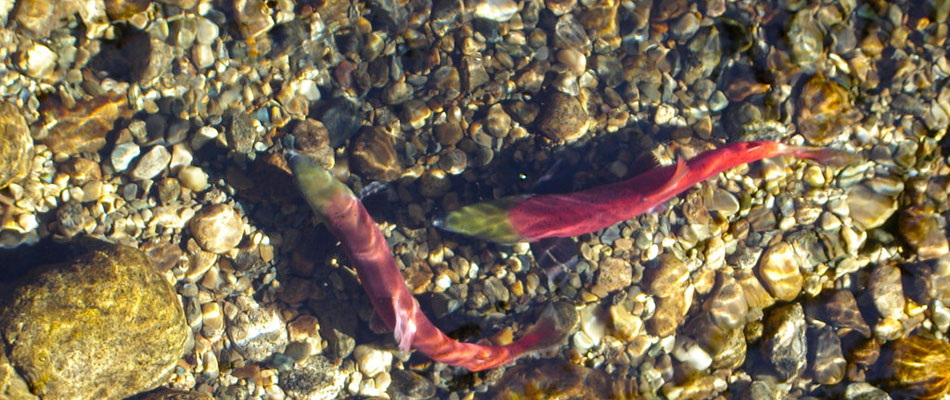
<p>Riparian areas are the vegetated borders of stream and lakes. Riparian landscapes provide high value habitat for birds and animals, and is very important for the health of freshwater fisheries.</p>
<p><em>What is the Riparian Areas Protection Regulation (RAPR) and when does it apply?</em></p>
<p>In much of BC riparian habitats are protected through the RAPR. If you are proposing development within 30 meters of stream or waterbody, a RAPR assessment may be necessary to ensure that this critical habitat is not lost or damaged. Under RAPR a stream can refer to a watercourse (even if dry), pond, lake, river, creek, brook, ditch, spring, or wetland.</p>
<p><em>Where does RAPR apply?</em></p>
<p>RAPR is not applicable in all areas of BC. The following is a list of areas where RAPR is used: Capital Region, Central Okanagan, Columbia-Shuswap, Comox-Strathcona, Cowichan Valley, Fraser Valley, Greater Vancouver (except the city of Vancouver), Nanaimo, North Okanagan, Okanagan-Similkameen, Powell River, Squamish-Lillooet, Sunshine Coast, Thompson-Nicola, Trust area under the Islands Trust Act</p>
<p><em>Who can assist?</em></p>
<p>RAPR assessments are performed by Qualified Environmental Professionals (QEPs). Canyon Wren Consulting can assist you in determining the required setback (SPEA) for your riparian area. Our QEPs will provide measures to protect the SPEA, prevent damages to the habitat by the proposed development and assist you through the permitting process.</p>
<p><img decoding="async" class="aligncenter wp-image-92 size-full" src="https://canyonwren.ca/wp/wp-content/uploads/2017/03/Kokanee-Spawning.jpg" alt="" width="950" height="400" srcset="https://canyonwren.ca/wp/wp-content/uploads/2017/03/Kokanee-Spawning.jpg 950w, https://canyonwren.ca/wp/wp-content/uploads/2017/03/Kokanee-Spawning-300x126.jpg 300w, https://canyonwren.ca/wp/wp-content/uploads/2017/03/Kokanee-Spawning-768x323.jpg 768w" sizes="(max-width: 950px) 100vw, 950px" /></p>

<!--themify_builder_content-->
<div id="themify_builder_content-91" data-postid="91" class="themify_builder_content themify_builder_content-91 themify_builder tf_clear">
    </div>
<!--/themify_builder_content-->
]]></content>
		
					<link rel="replies" type="text/html" href="https://canyonwren.ca/riparianareasregulation/#comments" thr:count="2" />
			<link rel="replies" type="application/atom+xml" href="https://canyonwren.ca/riparianareasregulation/feed/atom/" thr:count="2" />
			<thr:total>2</thr:total>
			</entry>
	</feed>
